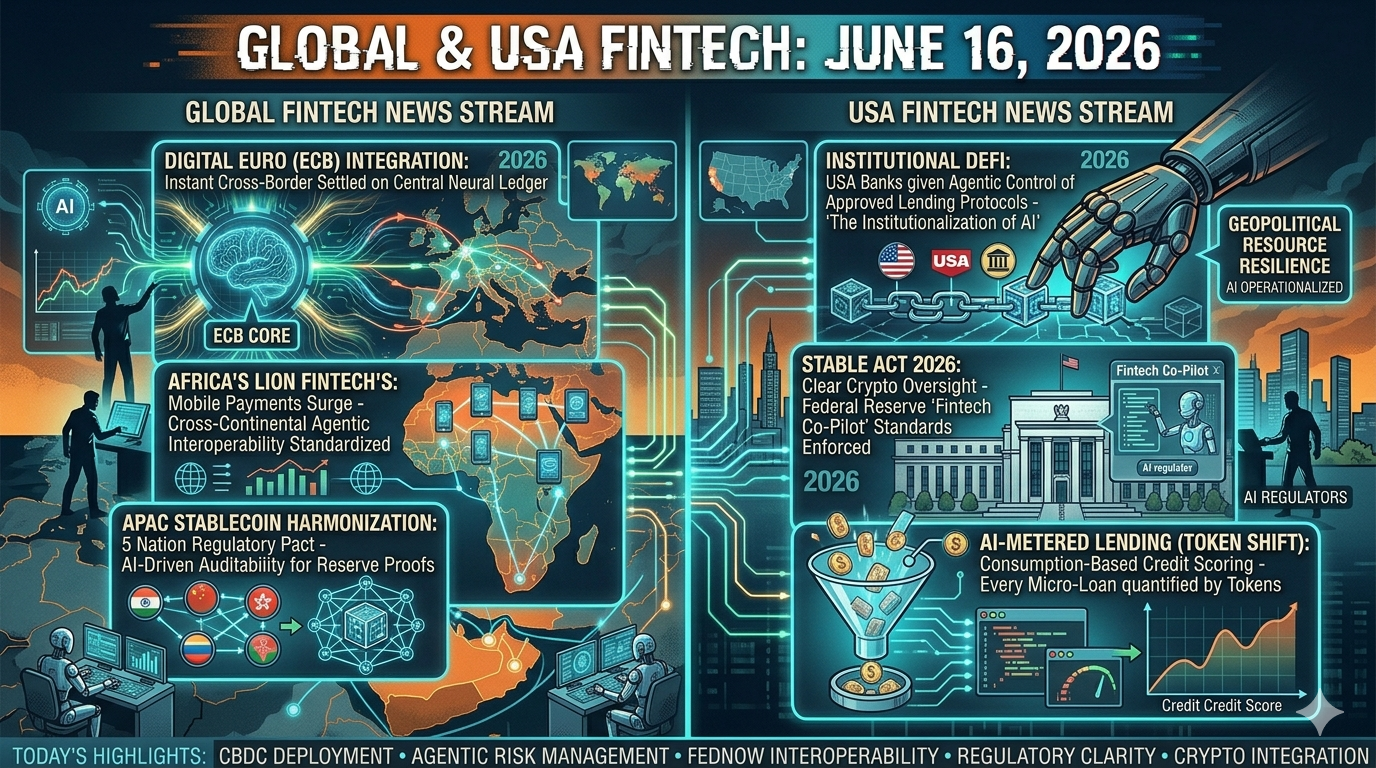
The global financial technology sector has officially crossed the threshold from experimental recovery to outright dominance.
Today, June 2, 2026, a wave of definitive market reports, regulatory indices, and international banking summits have converged to reveal a unified truth: financial institutions are no longer just "trying out" artificial intelligence. They are entirely rewiring their core operational structures around it.
From massive revenue milestones to deep structural anxieties surrounding machine trust and governance, here is the essential breakdown of today’s top trending headlines at the intersection of AI and finance.
1. Landmark BCG Report: Global FinTech Revenues Cross $500 Billion as AI Multiplies Productivity
The biggest story dominating the wire today comes from Boston Consulting Group (BCG) and FT Partners, who officially released their highly anticipated Global Fintech Report 2026: From Recovery to Resurgence.
The findings show that the fintech sector has bounced back from its post-pandemic calibration period, entering its most profitable era in history.
   GLOBAL FINTECH RESURGENCE BY THE NUMBERS (2026)
┌────────────────────────────────────────────────────────┐
│                                                        │
│   [Total Revenues] ────► Over $500 Billion (+22% YoY)  │
│                                                        │
│   [Public Profitability] ──► 74% of Large Players Net  │
│                                                        │
│   [AI Developer Lift] ───► Up to 5x Productivity Gains │
│                                                        │
└────────────────────────────────────────────────────────┘
The AI Advantage Disconnect
While global fintech revenue is growing four times faster than traditional incumbent banks, the report highlights a sharp operational divide. The top-performing firms are no longer treating AI as a basic writing or coding copilot.
Instead, the fintechs capturing the highest profit margins are using integrated AI architectures to completely redesign heavy back-office workflows. According to the data, companies that deeply embed AI into core systems are achieving up to five times greater developer and analyst productivity, with the most aggressive near-term financial gains occurring in:
Automated Credit Underwriting: Processing multi-stream alternative data in real-time.
Anti-Money Laundering (AML) & Compliance: Running autonomous case triage.
Smart Payment Routing: Instantly balancing transaction fees, authorization rates, and fraud risk metrics.
Industry Perspective: Steve McLaughlin, CEO of FT Partners, noted in today's release: "A real divide is emerging between companies that have made AI foundational—embedded across finance, accounting, and fraud—and those still using it for simple coding help. The difference comes down to the willingness to actually rewire the organization."
2. Southeast Asian Banks Confront the AI Trust Bottleneck
At tech briefings across Singapore and Southeast Asia today, a critical debate has spilled into the open: Banks want advanced AI capabilities, but can they actually trust them inside live financial production environments?
Following recent announcements from global institutions like Standard Chartered—which plans to automate nearly 15% of its corporate function roles by 2030 through systemic AI deployment—regional banking executives are sounding the alarm on operational risk.
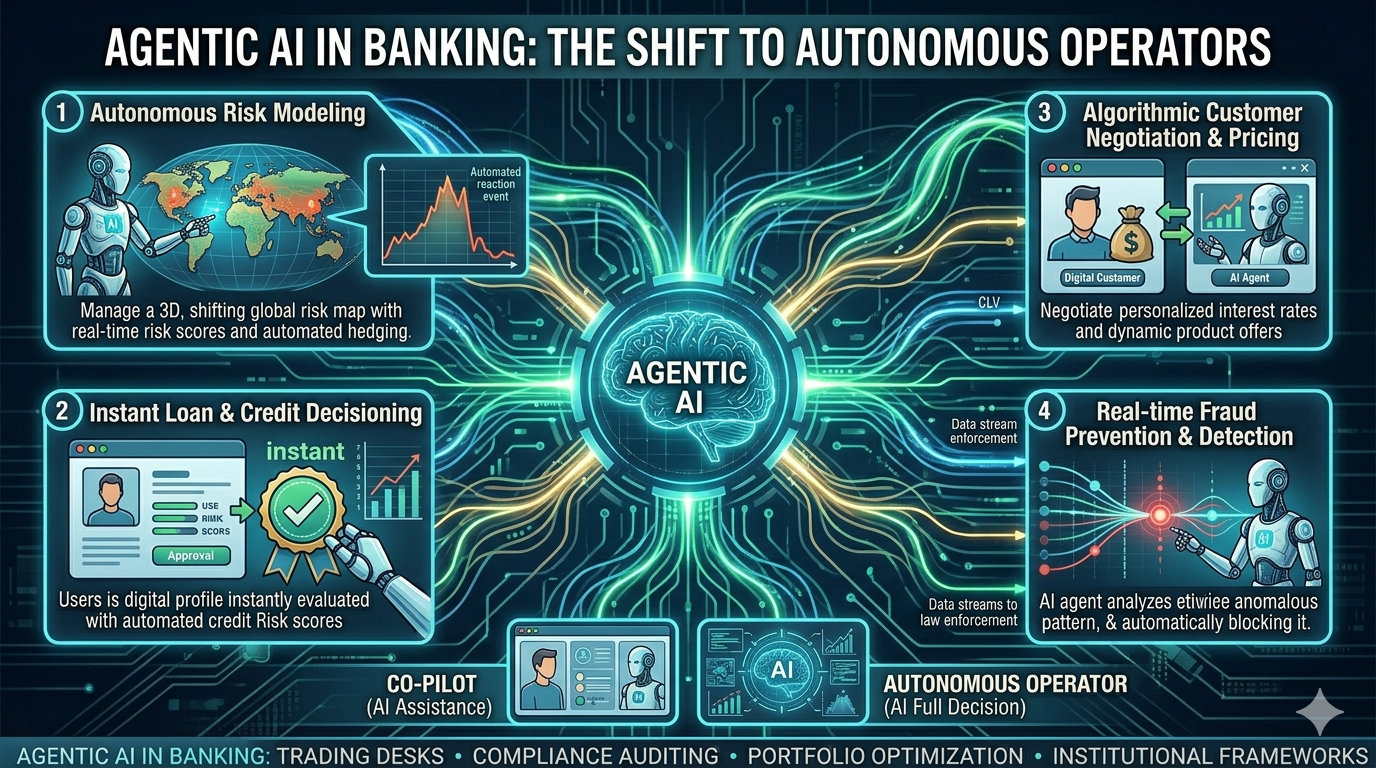
                 THE BANKING AUTOMATION RISK SPECTRUM
   ┌───────────────────────┬────────────────────────┬─────────────────────┐
   │ ASSIST WORKFLOWS      │ APPROVE WORKFLOWS      │ AUTONOMOUS RAIL     │
   ├───────────────────────┼────────────────────────┼─────────────────────┤
   │ Chatbots & Summaries  │ Human-in-the-Loop      │ Machine-to-Machine  │
   │ Low Risk / Low Return │ Balanced Scale & Audit │ High Unit Economics │
   └───────────────────────┴────────────────────────┴─────────────────────┘
Leaders from Ant Digital Technologies publicly emphasized today that while Southeast Asian financial institutions recognize the massive unit economic upside of AI, the primary hurdle to widespread deployment remains explainability and auditability.
If a multi-agent system flags a suspicious cross-border corporate payment or dynamically alters a customer's credit line, compliance teams must be able to produce an absolute, un-hallucinated audit trail for regional regulators. The narrative across APAC has officially shifted from hyping up model capabilities to building air-tight infrastructure verification layers.
3. Wolters Kluwer Launches Banking AI Risk & Governance Index
Tying directly into the industry's need for trust infrastructure, compliance giant Wolters Kluwer released its comprehensive US Banking AI Risk and Governance Index today.
Surveying executives across 230 banking institutions, the index exposes critical security and readiness gaps as autonomous AI adoption outpaces traditional board oversight.
The index highlights three non-negotiable governance controls that financial institutions are rushing to deploy to close this readiness gap:
Strict Data Lineage Auditing: Ensuring that training datasets and live retrieval engines completely shield Protected Health Information (PHI) and Personally Identifiable Information (PII).
Dynamic Decision Capture: Creating a permanent, immutable record of every algorithmic decision, transaction route, and override path for regulatory lookup.
Automated Drift & Kill-Switches: Implementing continuous evaluation harnesses that automatically freeze an operational model the moment its outputs deviate from normalized risk thresholds.
Operational Takeaways for FinTech Developers
Today's news signals a clear shift for software engineers, product managers, and fintech founders. The competitive landscape has shifted.
Simply connecting a consumer chatbot API to an old database is no longer a viable product strategy. The market is exclusively rewarding deep, structured enterprise modernization.
To win the next era of fintech growth, platforms must be engineered from the ground up with strict model governance, robust security perimeters, and a focus on complete structural workflow automation.