The Great Pivot: Why May 3, 2026, is a Turning Point for Your Portfolio
If 2025 was the year we learned to live with AI, 2026 is the year we are learning to live with "Infinite Uncertainty."
As we wake up today, May 3, the headlines are dominated by a dangerous dance in the Middle East. With the Strait of Hormuz effectively becoming a geopolitical "choke point" and oil prices fluctuating near the $110 mark, the financial world is no longer looking for the next "moon shot." Instead, investors are building bunkers—both literal and digital.
In this deep dive, we will explore the three pillars of today's market: the Energy-Inflation Trap, the $5,000 Gold Horizon, and the Autonomous AI Co-Worker.
Part I: The Energy-Inflation Trap – The Shadow of the Strait
Today’s most urgent news involves the standoff over the Strait of Hormuz. With Iran and the US exchanging verbal blows, the International Energy Agency (IEA) has listed nearly 40 countries currently in an "Emergency Energy State."
The "Operation Epic Fury" Fallout
The conflict has created what economists call a Supply-Shock Inflation. Unlike the demand-driven inflation of the post-pandemic era, this is a structural crisis.
Global GDP Revised: The IMF has already trimmed global growth forecasts to 3.1%, citing the defence burden and rising energy costs.
The Clean Energy Paradox: Ironically, the war is accelerating the clean energy transition. As fossil fuels become a liability, countries like China (the world's leading renewables manufacturer) are seeing a massive boon in demand for non-oil alternatives.
For your portfolio, this means that "Energy Independence" isn't just a political slogan—it’s a prerequisite for financial survival.
Part II: The $5,000 Gold Horizon – Return of the Safe Haven
While energy is volatile, precious metals speak a different language. Today, May 3, analysts are closely watching Gold.
The Road to $5,000
With global inflation projected to remain at 4.0% through 2026, gold has emerged as the ultimate hedge.
Institutional Flow: We aren't just seeing retail panic. Central banks and foreign sovereign wealth funds are moving into gold at record rates.
The ETF Confirmation: As one StoneX analyst noted today, "If gold starts approaching $5k anytime soon... watch the ETF flows for clearer confirmation."
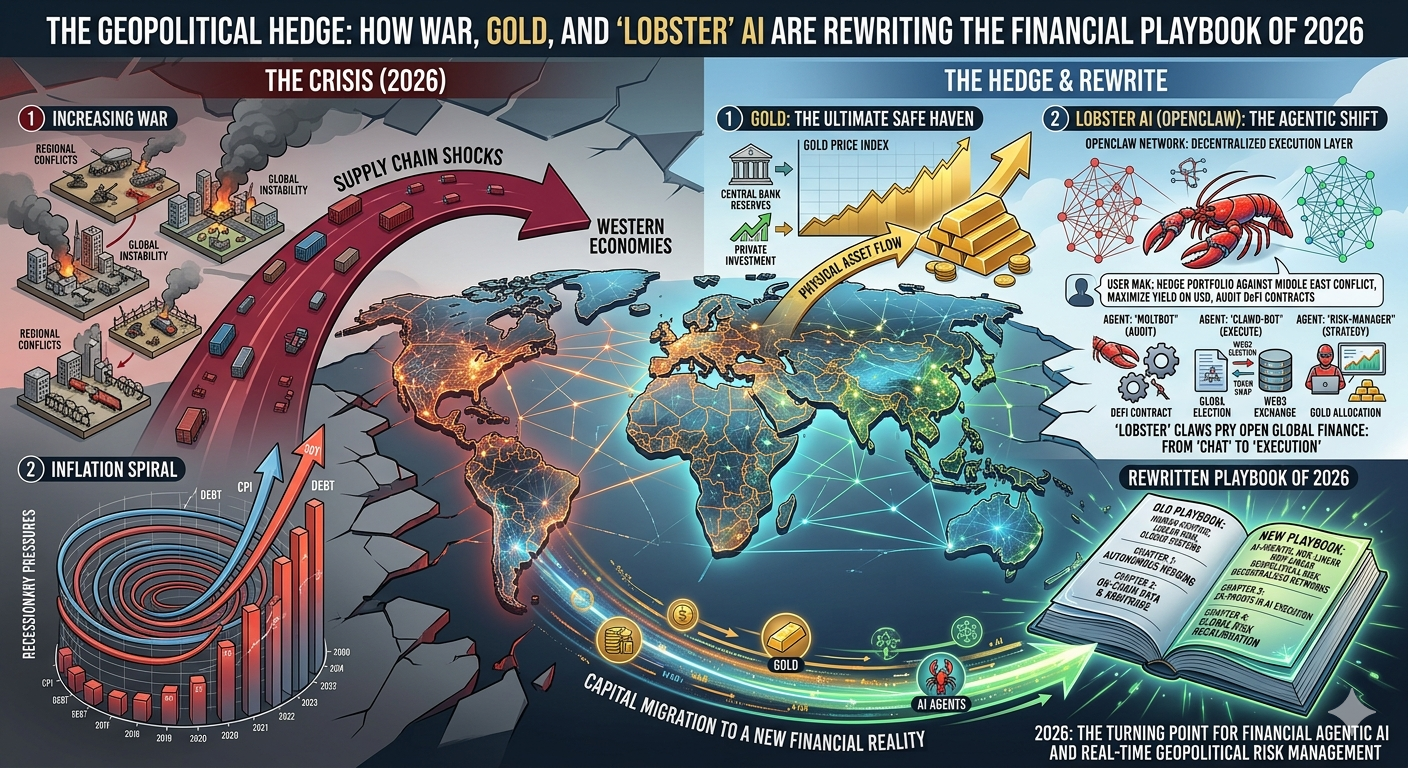
If you’re looking for a place to park wealth while the "Strait of Hormuz" situation settles, the yellow metal remains the undisputed king of the 2026 "Geopolitical Hedge."
Part III: The "Agentic" Era – AI Moves from Assistant to Authority
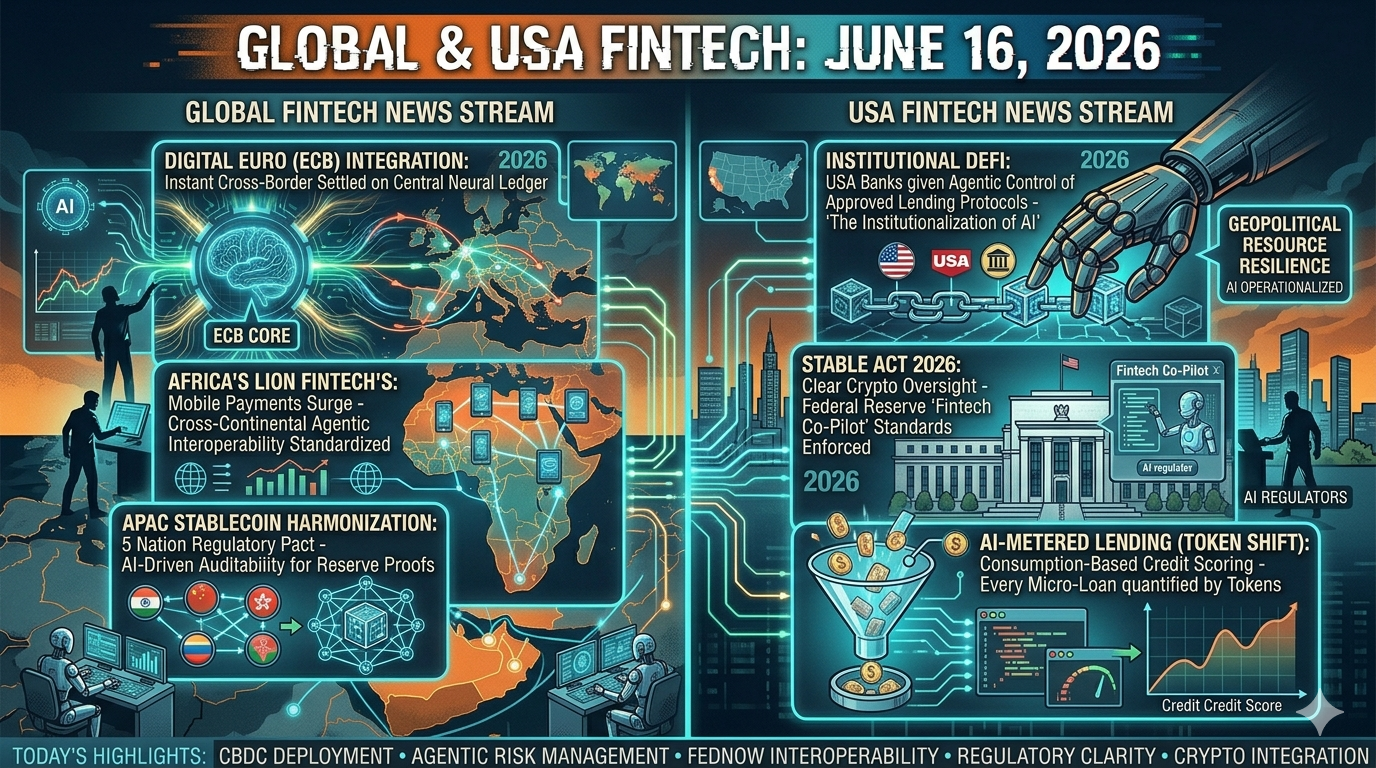
While the world focuses on war, the "plumbing" of the financial system is undergoing its biggest upgrade in a century. We have officially moved past "Chatbot AI" and into the Agentic Era.
The Rise of Digital Co-Workers
Banks like Goldman Sachs and Lloyds are no longer just "piloting" AI. Today, they are deploying Autonomous Agents powered by models like Anthropic’s Claude to handle core operations.
Transactional Authority: These aren't bots that just answer questions. They have the authority to settle routine trades, manage compliance checks, and conduct fraud investigations.
The £100 Million Value: Lloyds Banking Group expects agentic AI to add £100 million in value this year alone by automating complex complaints and allowing human staff to focus on high-stakes escalations.
The "Lobster" Economy Expansion
Building on the success of Alipay's AI Pay (which hit 100 million users this quarter), autonomous agents—nicknamed "lobsters"—are now handling end-to-end purchases. Today, more people are letting an AI agent negotiate their insurance premiums than are doing it themselves.
Part IV: Private Credit – The $41 Trillion Structural Shift
As traditional banks face tighter capital rules, a quiet revolution is happening in the lending market: the explosion of Private Credit.
The $2 Trillion Asset Class: Private credit has grown into a $2 trillion powerhouse, with Bloomberg estimating it could soon replace 15% of the traditional $41 trillion lending market.
Strategic Partnerships: Banks are no longer fighting private credit funds; they are marrying them. Partnerships like the Citigroup-Carlyle deal show that "co-investment" is the new standard for corporate funding.
For the savvy investor, the "Secondaries Market"—where stakes in these private deals are traded—reached a record $226 billion this month. This is where the real liquidity is being found in an otherwise sluggish IPO market.
Part V: Technical Deep Dive – The Math of Predictive Risk
As a software engineer, you know that the "magic" of AI is really just sophisticated math. In today's volatile market, the most valuable algorithm is the Behavioral Fraud Intelligence (BFI) Matrix.
Traditional fraud detection looked for "triggers." Today’s agentic AI looks for "Dormancy Patterns."
The math behind detecting "Mule Accounts" (which sit quiet for months before moving illicit funds) uses a Log-Normal Distribution to identify anomalies in behavioral data:
$$f(x; \mu, \sigma) = \frac{1}{x\sigma\sqrt{2\pi}} \exp\left( -\frac{(\ln x - \mu)^2}{2\sigma^2} \right)$$
By applying this to transaction frequency ($x$), AI agents can predict a "fraudulent burst" before it even happens. This is how firms are achieving "Clear-to-Close" in days rather than weeks.
Part VI: The Roadmap for the Rest of 2026
Where do we go from here? The "Shadow of War" will linger, but the financial system is becoming more resilient.
Mobile as a Command Centre: In 2026, your mobile banking app is no longer just a place to check your balance; it’s an AI-powered Financial Command Centre that understands your personality and goals.
Continuous Monitoring: We are moving away from "Point-in-Time" banking. Your wealth is being monitored 24/7, with AI agents adjusting your risk profile in real-time as energy prices shift.
Networked Intelligence: APIs are no longer just about "connecting apps"; they are the nervous system of Networked Intelligence, allowing for "Money with Context."
Conclusion: Stay Liquid, Stay Intelligent
The lesson of May 3, 2026, is clear: The traditional boundaries of finance are gone. Geopolitics is energy, energy is inflation, and inflation is the fuel for AI-driven transformation.
Whether you are watching the price of July Corn, the $135 oil scenario, or the latest agentic rollout from Anthropic, the goal remains the same: Stay ahead of the "Intent Lag."
Which trend are you betting on today? Are you hedging with $5k gold, or are you putting your trust in the "Agentic" revolution? Let’s discuss in the comments below.
SEO Assets for the Post
Keywords: Geopolitical Hedge, Agentic AI 2026, Middle East Conflict Finance, $5000 Gold Forecast, Private Credit Expansion, Alipay Lobster AI, IMF Global Growth Revision.
Recommended Visuals: A chart showing the divergence between Oil and Clean Energy Stocks; a screenshot of an AI "Transaction Verification" dashboard; a comparison table of Traditional vs. Private Credit lending volumes.
Internal Link Strategy: Link this to your previous posts on KYA (Know Your Agent) and Flutter-based Fintech Architecture.